


Cold Plate
Why Are Skiving Heatsinks the Best Choice for Liquid Cooling Cold Plates?
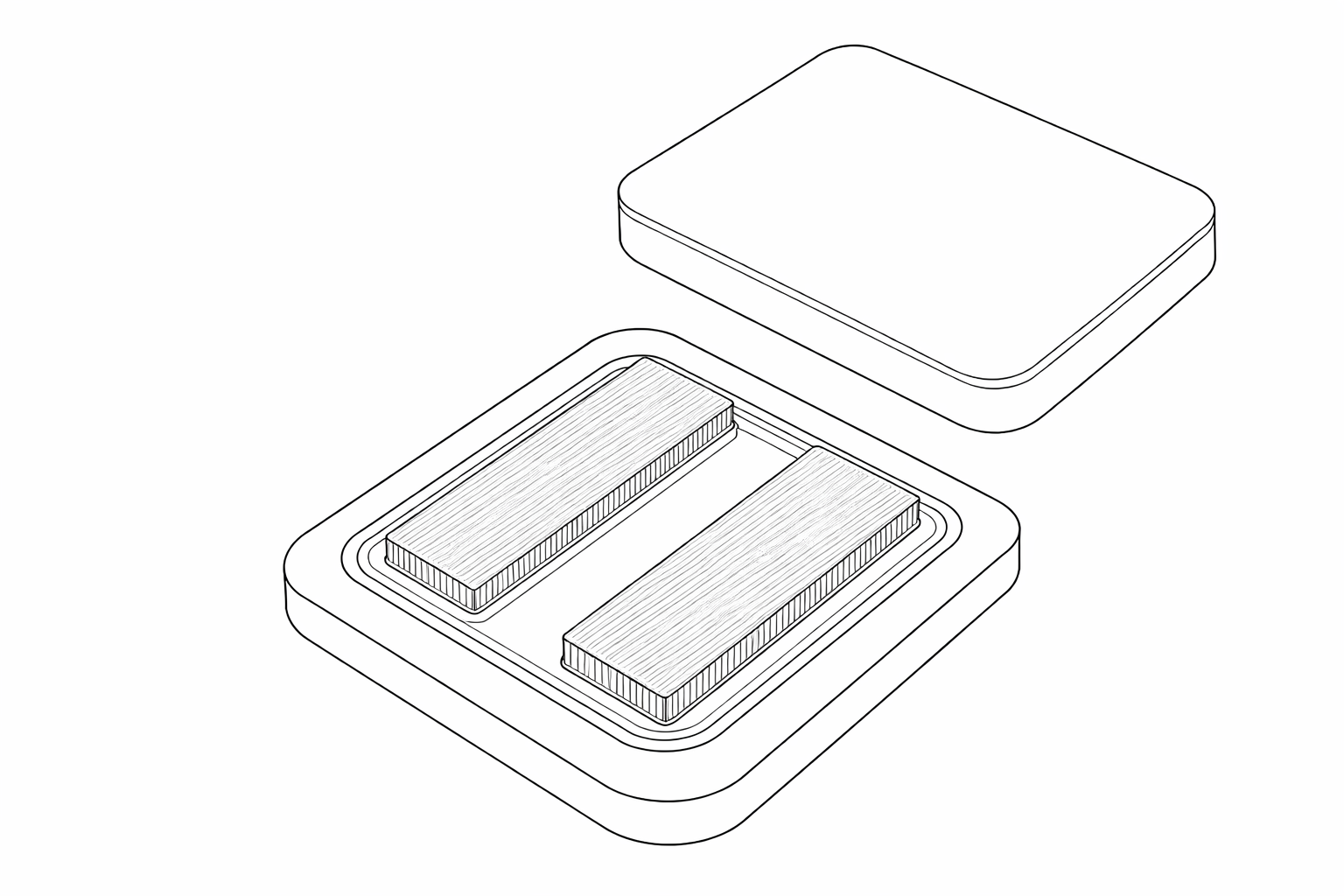
Q1:What Are the Real Requirements of a Liquid Cooling Cold Plate?
A liquid cooling cold plate is not simply about “more fins” or “larger surface area.”
It must simultaneously satisfy three critical requirements:
1. High Heat Flux
Heat sources are concentrated in extremely small areas (CPU / GPU / AI chips)
2. Ultra-Short Thermal Path
Heat must transfer rapidly from the base to the fins, then into the coolant
3. High Heat Transfer Efficiency in Limited Space
With narrow flow channels and pressure drop sensitivity, fin structures must be highly
controllable
Any unnecessary interface or thermal resistance will directly degrade cooling
performance.
Q2|Why Is Interface Thermal Resistance So Critical in Cold Plates?
In high power density liquid cooling systems, the thermal path is typically:
Heat Source → Base → Fin → Coolant
If an additional layer exists between the base and fins, such as:
- Solder layer
- Adhesive layer
- Imperfect mechanical contact
It introduces contact thermal resistance.
Under high heat flux conditions, this will:
1. Cause rapid temperature rise at the base
2. Reduce system response speed
3. Become a thermal bottleneck for the entire module
Q3|How Do Skiving Heatsinks Eliminate Thermal Resistance Issues?
The key advantage of skiving heatsinks is:
Fins are directly formed from the base material (monolithic structure).
- No soldering layer
- No assembly interface
- No material bonding boundary
thermal resistance.
Q4|Why Are Skiving Heatsinks Ideal for High-Density Flow Channel Designs?
Cold plates operate within limited flow channel space, requiring:
- Maximized contact area between coolant and metal
- Controlled pressure drop
- Ultra-thin fin pitch
- High-density, uniform fin structure
- Precisely controllable fin spacing
- High heat transfer efficiency
- Predictable flow resistance
- Greater design flexibility
Q5|Why Are Other Heatsink Manufacturing Methods Less Suitable?
- Extruded Heatsinks – Limited fin density
- Bonded / Soldered Fins – Thermal resistance and reliability concerns
- Press-Fit / Assembled Fins – Inconsistent thermal performance
- CNC Machining – High cost, not suitable for high fin density
Q6|Why Are Skiving Heatsinks Ideal for Copper Cold Plates?
Suitable for copper processing
- Maintains continuous grain structure
- Preserves conductivity and strength
Q7|Why Do High-End Servers and AI Systems Prefer Skiving Cold Plates?
- Long-term stability
- High reliability under heavy loads
- Consistent thermal performance
- No solder fatigue
- Excellent thermal cycling resistance
- Ideal for continuous operation
Skiving eliminates unnecessary interfaces, achieving:
- Minimal thermal resistance
- Maximum efficiency
- Superior long-term reliability